Corroded Rims: Can Pitted, Oxidized Wheels Be Fixed?
November 9, 2026 · AZ Rim Repair, Mesa AZ
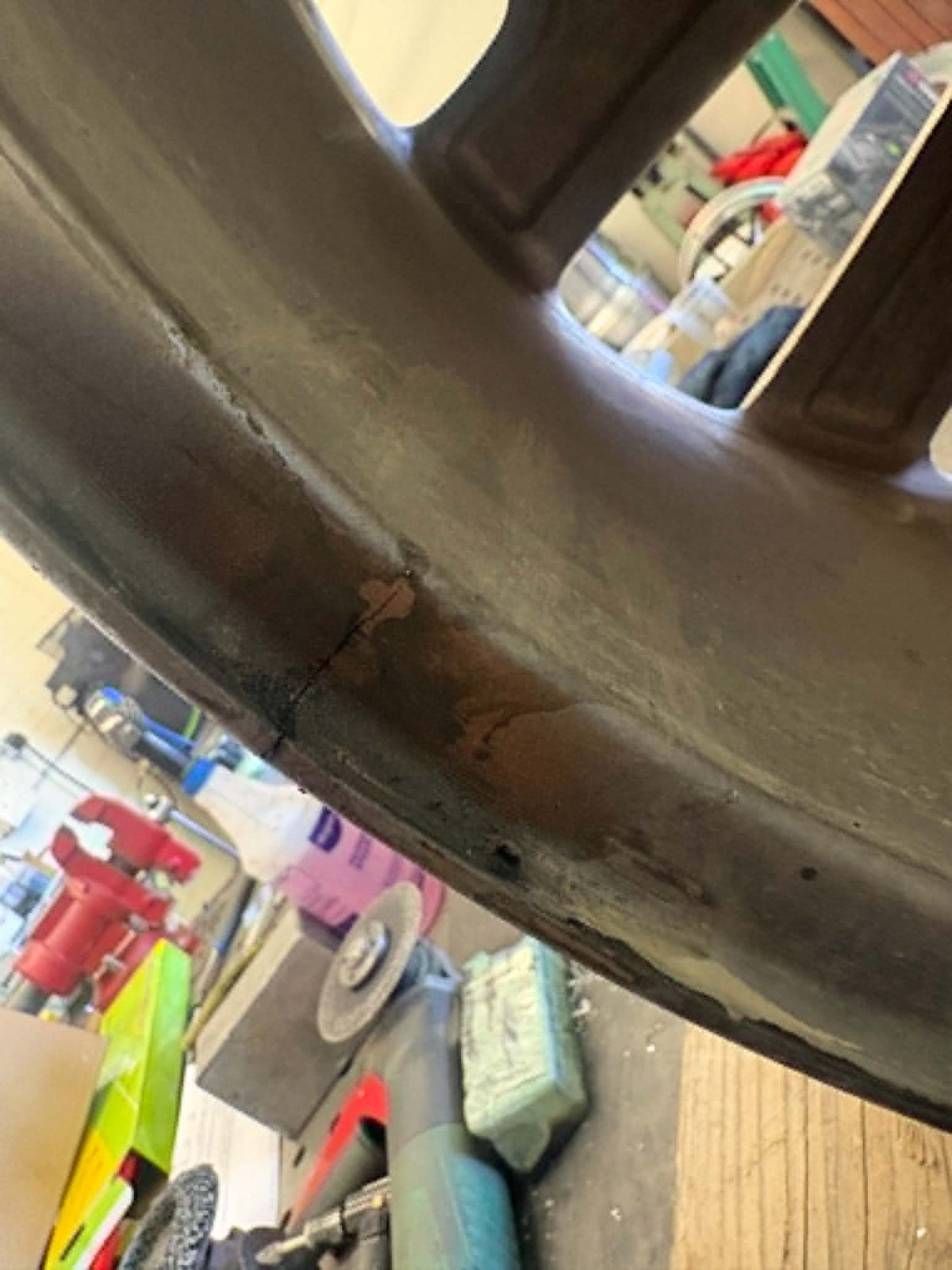
Chalky white patches on the spokes. Rough gray crust where the wheel used to be smooth. And the part that actually gets your attention: a tire that's soft every Monday morning no matter how many times you fill it. Corroded rims are one of the most misunderstood problems in wheel repair — because "corrosion" covers everything from a cosmetic film that wipes off to structural damage that ends the wheel's life. This guide separates the three, in the order we'd check them on the bench.
The short answer
Surface oxidation — white chalk or light etching on the face — is a cleaning or refinishing matter, not a safety issue. Corrosion where the tire seals against the wheel, on the bead seat, is the kind that loses air: the fix is a tire dismount and a proper cleanup of the sealing surface, not a can of sealant. And corrosion that has pitted deep into the bead area or eaten through the metal is the replace case — no cleanup makes a thin wheel safe again. If you're not sure which one you have, photos settle it: send them over with a note on what the tire is doing, and you'll get a straight answer, including "this one's done" when it is.
What that white stuff actually is
Alloy wheels are aluminum alloy, and aluminum doesn't rust the way steel does — it oxidizes into that familiar white, chalky film instead. That's why the crusted patches on an alloy wheel look nothing like the flaking brown scale on a bare steel spare. The mechanism matters, because it tells you how far the damage has gone: galvanic corrosion creeps in where dissimilar metals touch — the wheel, steel lug hardware, brake components — especially with moisture and road grime bridging the joint, and brake-dust etching bores into the finish every time hot dust bakes onto the face.
Arizona accelerates all of it. Ultraviolet degrades the clear coat year after year, 110-degree summers bake brake dust into the surface, and monsoon-season humidity supplies the moisture corrosion needs. The clear coat is the wheel's skin — while it's intact, oxidation stays on the surface and cleans off. Once it peels or is scuffed through, corrosion gets into the base metal itself, and that's when smooth chalk turns into pitting: small, deep craters that no cleaner reaches, because the metal is gone. A wheel left scuffed and unfixed for a season or two doesn't just look worse — it corrodes into a bigger job, which is exactly why we tell people to fix damage early.
The kind that loses air: bead-seat corrosion
The tire on a modern wheel does not seal to the rubber alone — it seals against two machined ledges on the barrel called the bead seats. Those surfaces have to be smooth and clean for the rubber bead to press airtight against the metal. They're also the perfect trap for moisture and salt sitting between tire and wheel for years, so they're often the first place deep corrosion takes hold — hidden from view until the seal itself starts to weep.
The symptom pattern is distinctive: a tire that loses a few PSI over days rather than hours, a TPMS warning that keeps returning after every top-off, and no nail anywhere in the tread. You can confirm the location yourself with soapy water brushed along the bead line where tire meets rim — fine bubbles at the seam, especially on the underside, mean air is escaping between the rubber and the corroded metal.
The repair is bench work, because the offending surface is unreachable with the tire on: the tire comes off the wheel, the bead seat gets stripped of corrosion back to clean metal, the surface is checked for pitting underneath, and the tire goes back on with a proper bead sealer before rebalancing. If the pitting under the corrosion is shallow, that cleanup solves the leak for good. If it's deep, the honest answer changes: smoothing the seat "until it's clean" can remove too much metal, and a wheel that can't hold a seal is a replacement. That's a judgment we make with the wheel in hand, never from a photo alone — photos start the quote, the bench makes the final call.
One trap to avoid on the way: canned tire sealant. It's the natural instinct for a slow leak, but proper tire repair means demounting the tire and fixing the cause from the inside, as the U.S. Tire Manufacturers Association describes — and a corroded bead seat is a metal-surface problem the goop can't seal at all, so now the wheel has corrosion AND sealant contamination to clean out at dismount. It's also why our published policy carries a $50 cleanup fee for sealant-filled tires: the stuff has to be cleaned off the wheel, the tire, and the dismount equipment, because it damages the machine if it isn't.
Cosmetic corrosion: what cleaning can and can't fix
On the face and barrel, oxidation with the clear coat intact is driveway territory — a pH-neutral wheel cleaner, a soft brush, and patience. What cleaning can't do is restore metal that's already pitted or a finish that's already failed. Once corrosion is in the metal, the fix is a refinish: strip the wheel, treat the corrosion, and refinish it so the surface is sealed again — the same logic as a curb rash repair, except the trigger is corrosion instead of a scuff, and a refinish is also the moment to choose a new powder coat finish if the old painted look was part of the problem.
Chrome wheels are the exception path. Chrome plating that has started to lift and flake cannot be cleaned back — the plating is failing, and the metal underneath corrodes differently than bare aluminum. Flaking chrome near the bead is a sealing problem on top of a cosmetic one. And plain steel wheels do rust, but they're also a repair case depending on the damage — the material changes the work, not the willingness to look at it.
When the wheel is done
Three corrosion cases end in replacement rather than repair. Deep pitting through the bead seat, where cleanup would thin the sealing surface past safe limits. Corrosion that has weakened the aluminum throughout — pitted everywhere, metal visibly eroded, the wheel structurally compromised. And chrome wheels with lifting plating on the sealing surfaces. In those cases paying for a "repair" would be paying to keep an unsafe wheel on the road, and the honest shop answer is no — the same line we hold on cracks through the mounting face. The math usually makes it easy: a replacement alloy wheel commonly runs $300 to over $1,000 once you add mounting, balancing, and matching the rest of the set, so repair is worth checking first — and if it's genuinely past saving, we'll say so in the same breath as the quote. The full repair-versus-replace math is laid out in our rim repair cost guide.
How corrosion work gets quoted
Corrosion damage ranges from a bead-seat brushing to a full strip-and-refinish to a replace verdict, so it isn't a one-price job — we quote it from photos first, the same way we handle curb rash, and the wheel gets the final look in person when it arrives. If the wheel also has a crack or a bend, that work carries our published prices — $200 for a bare wheel, $250 with the tire mounted, $350 for a whole-vehicle visit, plus $50 for each additional crack or bend on the same wheel — but corroded-only wheels are photo-quoted case by case, because "corrosion" alone doesn't tell us which of the three buckets the wheel is in until we can see it. Severely corroded wheels are never priced blind: the owner looks at those personally.
FAQ: corroded rim questions
Can corroded rims be repaired?
Often, yes — it depends entirely on where and how deep. Surface oxidation cleans or refinishes away. Corrosion on the bead seat that's causing a slow leak is repaired by dismounting the tire and cleaning the sealing surface back to sound metal. Deep pitting through the bead seat or corrosion that has weakened the wheel throughout means replacement.
Is it safe to drive with rusted rims?
Light surface corrosion on an alloy wheel is not a safety problem by itself. A wheel that is heavily pitted, visibly eroded, or losing air from a corroded bead seat should be looked at before it's driven far — a slow leak left alone becomes an underinflated tire at highway speed, and badly weakened metal can crack under load. When in doubt, have the wheel inspected in hand.
How do you get corrosion off of rims?
While the clear coat is intact, a pH-neutral wheel cleaner and a soft brush remove surface oxidation at home. Once corrosion is in the metal — pitting, peeling finish, white crust that returns after cleaning — it takes a refinish: the wheel is stripped, treated, and refinished to seal the surface again. Corrosion on the bead seat takes a tire dismount; it's not reachable any other way.
Can you powder coat corroded rims?
Yes, when the corrosion is cosmetic — powder coating a wheel includes stripping the surface, which removes oxidation as part of the prep. It is not a fix for structural corrosion: pitting that has thinned the bead seat or weakened the wheel means the wheel is done, and coating over it just hides the problem.
Why do aluminum wheels turn white?
That white chalk is aluminum oxide — the way aluminum corrodes instead of rusting. It forms where the clear coat has failed and the bare alloy meets moisture, brake dust, and dissimilar-metal contact, and Arizona's sun, heat, and monsoon humidity accelerate it. It's the visible signal that the wheel's protective finish is compromised.
How do I know if my bead seat is leaking?
The signs are a tire that drops a few PSI over several days, a TPMS light that keeps coming back, and no puncture found in the tread. Confirm it with soapy water brushed along the bead line where the tire meets the rim — a line of fine bubbles at the seam is air escaping past a corroded seat. The fix happens with the tire off, at a bench.
Bringing the wheel to us
Wheels come to us off the car — that's how our intake works, and it's why our turnaround on bench work is short; pickup is available for an added charge depending on where you are. Send photos first: the face, the barrel inside and out if you can, and a close-up where the tire meets the rim, plus one line on what the tire has been doing. If the wheel is cracked or bent as well as corroded, say so up front — corrosion changes how that work gets done, and it's the difference between one visit and two. The Tempe drop-off takes wheels and tires by appointment, and crack repairs start at $200 on a bare wheel if the corrosion turns out to have company.
Wheel damage? Text us a photo for a free quote.
Text a photo for a free quote — straightening, welding, curb rash, powder coating.