Pothole Rim Damage in Phoenix: What to Check After the Hit
October 27, 2026 · AZ Rim Repair, Mesa AZ
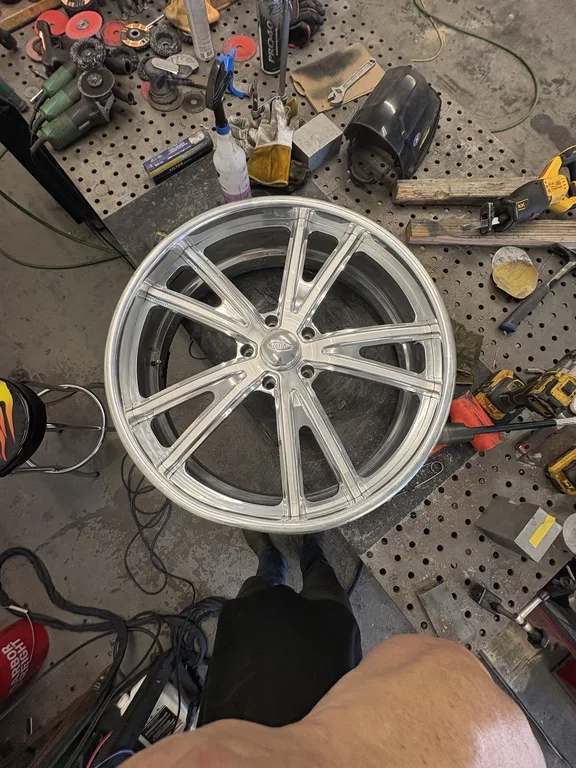
In Phoenix, pothole season follows the rain: a few weeks after the first real monsoon storms — and again after winter rain — fresh craters open up across the Valley. A driver catches an edge of a new pothole on Loop 101 or a chewed-up Tempe side street, hears that ugly thud, and spends the next mile wondering what just broke. This guide is what we tell those drivers: what a pothole hit actually does to a wheel, the five-minute check to do before you keep driving, and what the repair genuinely costs — with our confirmed prices, not a teaser number.
The short answer
A pothole hit usually leaves one of three things: a bent barrel or lip, a crack in the barrel, or just cosmetic scuffing. A single bend or crack on a wheel we can repair starts at $200 for a bare wheel, $250 with the tire mounted, or $350 for the whole car — and each additional crack or bend adds $50. Severe damage — a wheel cracked in several places or bent hard enough to deform the face — gets assessed in person before anyone quotes it, because no honest shop prices that from a description. Start with our bent rim repair page if you already know the wheel is bent, or send us photos if you're not sure what you're looking at.
Why Phoenix potholes cluster after monsoon
Potholes aren't random. Water works its way into cracks in the pavement, softens what's underneath, and then traffic breaks the weakened surface open — that's the mechanism behind how potholes form. In the Valley, that water arrives in concentrated bursts: monsoon storms from June through September, and winter rain systems after that. So the craters appear in waves a few weeks after each rainy stretch, once the roads are dry again and drivers have stopped expecting them. That's also why pothole damage is impact damage — hard, single-strike hits at speed, not the slow grind of a rough road.
What a pothole hit actually does to a wheel
The wheel takes the hit in a specific order. The tire absorbs some of it — sometimes too much of it, leaving a pinched sidewall or an internal injury you can't see from the driveway, which is why the tire people at the U.S. Tire Manufacturers Association tell drivers to inspect the tire after any hard impact, not just the rim. What's left goes straight into the barrel.
What a pothole hit typically leaves behind, roughly in order of frequency:
Bent inner barrel and lip: the inboard edge takes the hit because it's what's facing the pothole when your suspension loads. This is the classic pothole bend — a dent or flat spot on the inner barrel — and it's the signature damage of a hard pothole strike.
Cracked barrel: a harder hit on a brittle wheel splits the barrel instead of bending it — sometimes a visible crack, sometimes a hairline that only shows up with the tire off. That's the one that slowly leaks and gets worse. TIG welding is the only permanent fix.
Cosmetic rash: sometimes the wheel glances the edge and you get scrapes and gouges — annoying, not structural. That's curb rash territory, quoted from photos.
Bent wheel plus damaged tire: the combination nobody checks for: the bend is visible, the tire's internal damage isn't. If a tire has been run flat or pinched hard, industry repair procedure requires removing the tire from the wheel for a real inspection — a proper post-pothole check means the tire comes off so both the barrel and the inside of the tire can be examined. (One practical note: if the tire has canned sealant inside from an emergency kit, there's a $50 cleanup fee when it comes off the wheel — the sealant gets into the machine and damages it.)
The five-minute check after the hit
Pull over somewhere safe and do this before you decide to keep driving:
Step 1, look at the wheel straight-on: turn the steering wheel fully to one side so you can see the entire face and edge. A visible dent or flat spot on the inner lip is your bend.
Step 2, check the tire: sidewall bubble, cut, or a wheel that's suddenly losing air — that's a stop-driving-now situation.
Step 3, only if the tire passed that check — no bubble, no cut, no air loss, no visible crack — drive a short, slow stretch and feel: new vibration, a shake in the steering, the car pulling one way, or a tire pressure light that wasn't on before are all symptoms of a bent or leaking wheel. If the tire did NOT pass, don't drive it — get the car towed or call for help.
Step 4, check for a wobble at low speed: a wheel that hops or shudders below 30 mph can mean a flat-spotted or bent barrel rather than just a lost wheel weight — it needs a proper inspection either way.
NHTSA's own analysis of pre-crash factors found tire problems — underinflation, damage, and failures — overrepresented in the moments before a crash; the report is public at crashstats.nhtsa.dot.gov. Damaged tires and wheels are not a "drive it till payday" item.
Is it safe to keep driving?
A slightly bent wheel can hold air and feel almost normal at low speed around town — and still chew the tire bead, wear the tire unevenly, and stress the crack that's forming next to the bend. A cracked barrel is a hard no: it leaks, it flexes, and it grows. We broke down the symptoms in detail in is a slightly bent rim dangerous — short version: driving to the shop slowly is one thing, commuting on it for two weeks is how a $200 bend becomes a wheel and a tire.
What pothole damage costs to fix (confirmed prices)
These are our real numbers, not an opening bid: one crack or bend, $200 on a bare wheel, $250 with the tire mounted, $350 for the whole vehicle. Each additional crack or bend on the same wheel adds $50. Cosmetic damage is quoted from photos because depth and finish drive the work. Severe damage is assessed in person — no price over the phone, because a "small bend" can hide a cracked barrel behind the tire. The full breakdown, including what makes repair cheaper than replacement, is in our rim repair cost guide.
Timing is usually better than people fear. A crack weld on a bare wheel is bench work measured in minutes; straightening a bend is often same-day — likelier when the work is scheduled ahead — with 24 hours the honest planning number when the shop is busy. We lay out real turnarounds in how long a rim repair takes.
What to bring us: wheels, not the car
The fastest path is the Tempe drop-off: bring the wheels and tires off the car rather than the whole vehicle. It lets us demount the tire, see the entire barrel — including the damage hiding on the inboard side — and get straight onto the bench. Not sure what you have? Send photos first and you'll get an honest scope before you commit to anything.
Report the pothole — and know the claim process
Two things every Phoenix driver should know. First, report the pothole so it gets patched: the city takes street maintenance requests through myPHX311. Second, if the pothole damaged your car, the city has a formal damage-claim process through its Risk Management office. We're not lawyers and can't promise how any claim comes out — but documentation matters: photos of the pothole, the damage, and a dated repair invoice are what a claim reviewer will want, and a real repair record from a shop is part of that paper trail.
FAQ: pothole rim damage
Can hitting a pothole bend a rim?
Yes — it's the most common outcome of a hard pothole hit. The inboard barrel lip takes the impact when the suspension loads, and the result is a dent or flat spot that shows up as vibration. Most single bends straighten properly; see can a bent rim be fixed.
Is my car OK after hitting a pothole?
Check the wheel's face and inner lip, inspect the tire sidewall for bubbles or cuts, and drive a slow stretch listening for new vibration, pulling, or a tire-pressure light. Any of those means the wheel needs a real inspection with the tire off.
Is it safe to drive on a bent rim?
Slowly, briefly, to get it looked at — not as a plan. A bend chews the tire bead, wears the tire unevenly, and can hide a crack. A cracked barrel should not be driven on at all.
How do I know if the rim is cracked?
Symptoms are a slow recurring leak, a tire that won't hold air, or a visible split near a spoke or on the barrel. Hairline cracks often only show with the tire demounted — which is why a proper pothole inspection happens with the wheel off the car.
How much does pothole rim damage cost to fix?
One crack or bend: $200 bare wheel, $250 with tire, $350 whole car — confirmed prices, plus $50 for each additional crack or bend on the same wheel. Cosmetic damage is photo-quoted; severe damage is assessed in person.
Does insurance cover pothole rim damage?
It can, under collision coverage, after your deductible — whether it's worth claiming depends on the repair cost versus the deductible and your rates. Get the repair quote first; the numbers usually make the decision obvious.
Can the city of Phoenix pay for pothole damage?
The city has a formal claim process through Risk Management, and drivers can file it with documentation — photos of the pothole, the damage, and a dated repair invoice. We link the process, make no promises about outcomes, and the practical step is the same either way: get the wheel fixed.
Do I bring the wheel or the whole car?
Wheels and tires off the car, if you can. The shop is set up for wheels — space is tight and a whole car on stands blocks the work bay — so wheels-only is the fast route, and the Tempe wheel drop-off is built for it. If getting the wheels off isn't practical, there's a paid wheel pickup option depending on your location, or call ahead about a whole-vehicle visit ($350).
Should I replace the tire too?
Inspect, don't assume. A tire that was pinched in the hit can have internal damage with no visible mark. Industry procedure requires demounting the tire to inspect it properly — that's part of a proper wheel check — and we'll tell you straight if the tire is done. (Heads-up: if there's canned sealant inside the tire, removing it carries a $50 cleanup fee.)
If you've just hit a pothole and something feels off, don't wait for the vibration to become a habit — get a quote: send us photos, or bring the wheel by the Tempe shop. We'll tell you exactly what you're looking at and what it costs, before you spend a dollar.
Wheel damage? Text us a photo for a free quote.
Text a photo for a free quote — straightening, welding, curb rash, powder coating.